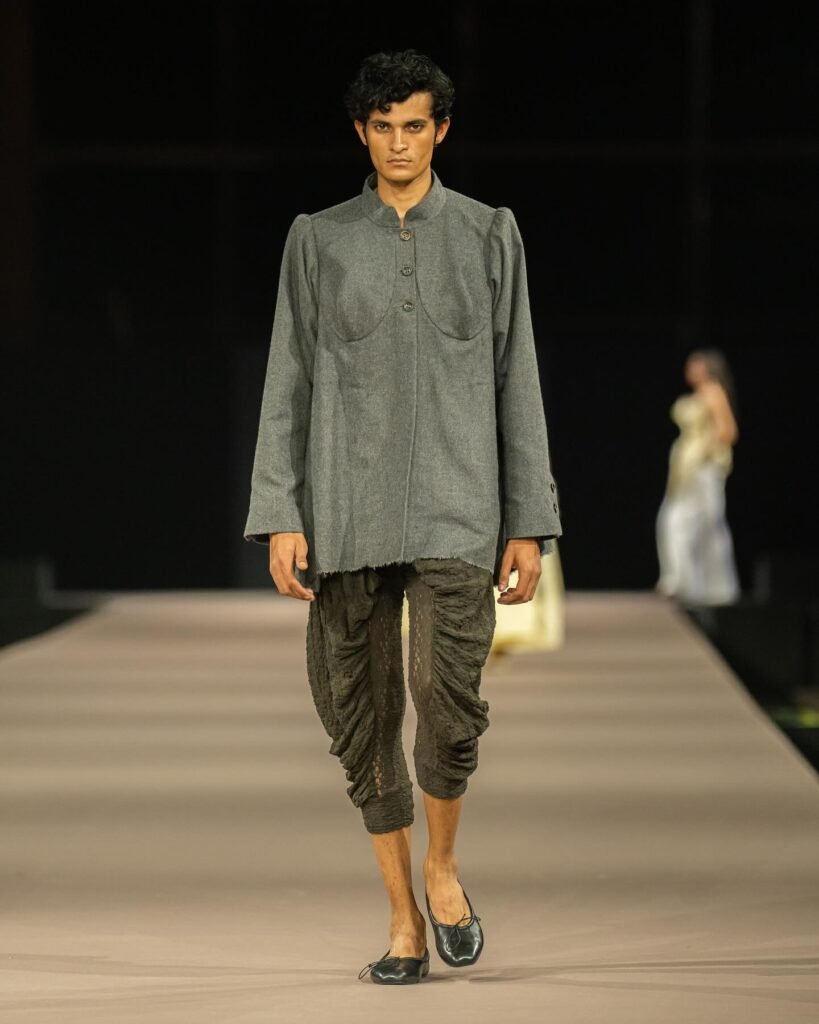
By Gaurav Vashisth (GV The Lensman)
In June 2023, a young female model died in Noida when the stage collapsed during a fashion show.
She was just doing her job—walking the ramp, bringing a designer’s vision to life. But unsafe
working conditions took her life.
This isn’t an isolated incident. It’s a symptom of a much larger problem: India’s fashion industry
has zero legal protections for the people who make it shine.
Let me tell you why this matters, and why we need a Fashion Workers Act in India—now.
The Glamour They See vs. The Reality We Live
From the outside, fashion looks like red carpets, designer outfits, and Instagram fame. But talk to
any working model, photographer, stylist, or makeup artist, and you’ll hear a different story:
- Late or no payments for completed work
- Vague contracts that mean nothing when disputes arise
- Exploitation by agencies charging hidden fees
- Unsafe working conditions with 12-16 hour shoots and zero breaks
- Sexual harassment with no proper channels to report it
- Wage theft where models are shown fake receipts and paid less than what clients actually
paid - No minimum wage, no fixed hours, no job security
And here’s the kicker: there’s no law specifically protecting fashion workers in India.
What My Book Revealed
When I published “The Model Mentor: An Insider’s Guide to Becoming a Fashion Model” in
May 2023, I dedicated two entire chapters to the legal and psychological challenges models face.
Fashion lawyers and psychologists contributed their expertise, and what emerged was disturbing:
The Indian labour laws simply don’t address the unique needs of fashion workers.
Models aren’t considered employees. They’re freelancers or independent contractors, which means
they fall through every legal crack. The Industrial Disputes Act? Doesn’t cover them. Payment of
Wages Act? Difficult to enforce. Sexual Harassment Act? Only applies to traditional workplaces.
We’ve created an entire industry with no safety net.
The Dark Side Nobody Talks About
Let me share some recent headlines that should shock you:
June 2023: Model dies after stage collapse during fashion show in Noida
2023: Parents duped of crores by gang offering fake modelling opportunities for kids
2018: Male models speak out about rampant sexual exploitation in the industry
2024: Fashion designer loses ₹11 lakh to online job fraud
These aren’t tabloid sensations. These are real people whose lives were damaged or destroyed
because there’s no regulatory framework, no accountability, no legal recourse.
How the Rest of the World Does It
While India struggles, other fashion capitals have been taking action.
New York’s Fashion Workers Act (December 2024)
This groundbreaking legislation, which took effect in June 2025, finally gives models and creatives
basic labour protections. Here’s what it guarantees:
✅ Employment status – Models are recognised as workers with rights
✅ Standardised contracts – Clear terms on payment, duration, image usage
✅ Timely payment – No more waiting months for your pay check
✅ Protection from wage theft – Agencies can’t show fake receipts
✅ Workplace safety – Reasonable hours, safe environments
✅ Anti-discrimination protection – No bias based on race, gender, body size, orientation
✅ Transparent agency fees – No hidden charges
✅ Control over images – Models own their likeness and must consent to its use
✅ Legal recourse – Proper channels to fight exploitation
This didn’t happen by accident. Organisations like the Model Alliance (founded in 2012 by Sara
Ziff) lobbied for years to make this happen.
France: Leading Europe
France passed the “Loi sur les Modèles” (Models Law), which requires:
- Health certificates for models
- Clear employment status
- Mandatory written contracts
- Protection against abuse
United Kingdom: Multiple Safeguards
The UK uses several laws to protect fashion workers: - Equality Act 2010 – Bans discrimination
- Employment Rights Act 1996 – Protects freelancers
- National Minimum Wage Act – Guarantees minimum pay
- Equity Union – Trade union fighting for models’ rights
Plus, they have the British Fashion Model Agents Association (BFMA), founded in 1974, which
regulates agencies and ensures professional standards.
What India Actually Has (Spoiler: Not Much)
Our current legal framework for fashion workers is basically duct tape and hope:
Indian Contract Act, 1872 – General contract law, nothing specific to fashion
Industrial Disputes Act, 1947 – Only covers traditional employment
Payment of Wages Act, 1936 – Hard to enforce for freelancers
Equal Remuneration Act, 1976 – Doesn’t address working conditions
Sexual Harassment Act, 2013 – Only applies to formal workplaces, doesn’t address harassment of
male workers
Notice what’s missing? Everything that makes fashion work unique.
The Reality Check: Why India NEEDS This Law
Let me spell out exactly what’s happening in the absence of proper legislation:
- Wage Theft is Normalised
Models complete a shoot, agencies bill the client ₹50,000, show the model a fake receipt for
₹30,000, and pay them ₹25,000. The model has zero recourse because there’s no regulatory body to
complain to. - Exploitation is Business as Usual
- Registration fees
- Portfolio fees
- Website fees
- Development charges
None of this appears in contracts. Models pay thousands upfront and often never get work.
- Working Conditions are Dangerous
16-hour shoots with no breaks. Unsafe sets. No safety protocols. And when accidents happen (like
that Noida stage collapse), there’s no accountability framework. - Intellectual Property Theft
Your face appears in a billboard campaign you never agreed to. Your photos are sold to third parties.
You have no control over your own image because usage rights aren’t clearly defined or protected. - Sexual Harassment Goes Unreported
Both male and female models face harassment. But without proper workplace definitions or
reporting mechanisms, perpetrators face zero consequences. - Discrimination is Rampant
Dark skin? Too short? Too curvy? Over 25? Good luck getting booked. There’s no legal protection
against discrimination in casting. - No Safety Net
No health insurance. No retirement benefits. No job security. One slow season and you’re broke,
with no unemployment benefits or social security to fall back on.
What a Fashion Workers Act Would Actually Do
If India passed comprehensive legislation protecting fashion workers, here’s what would change:
IMMEDIATE PROTECTIONS:
- Mandatory written contracts with clear payment terms, timelines, and usage rights
- Timely payment enforcement (within 30-45 days)
- Minimum wage standards for fashion work
- Maximum working hours and mandatory breaks
- Health and safety regulations for shoots and shows
LONG-TERM REFORMS: - Agency registration and accreditation system
- Transparent commission structure (no hidden fees)
- Protection of intellectual property rights
- Anti-discrimination provisions
- Sexual harassment reporting mechanisms
- Legal aid for dispute resolution
- Health certification requirements
- Mental health support systems
ACCOUNTABILITY: - Penalties for wage theft
- Consequences for unsafe working conditions
- Blacklisting of fraudulent agencies
- Criminal liability for severe violations
The Missing Pieces: What Else India Needs
A law alone won’t fix everything. We also need:
- An Industry Association
Like the BFMA in the UK or Model Alliance in the USA. A regulatory body that:
- Accredits legitimate agencies
- Sets professional standards
- Provides a platform for workers to report violations
- Advocates for policy changes
- Educates models and creatives about their rights
- Skill Recognition
The government should recognize modelling under the Skill India initiative. This would mean:
- Certified training programs
- Professional credentials
- Recognition as a legitimate career path
- Education and Awareness
Most aspiring models have no idea what their rights should be. We need:
- Workshops on contract reading
- Legal literacy programs
- Mentorship from experienced professionals
- Resources like my book “Model Mentor”
The Business Case (Because Money Talks)
Some people will say, “Why do models need special protection? They’re freelancers.”
Here’s why this matters economically:
The Indian fashion industry is worth ₹800-1000 crore and growing. But without proper regulations: - We lose credibility with international partners
- Talented people avoid the industry
- Scams give us a bad reputation globally
- We can’t compete with countries that have professional standards
Good regulations don’t hurt business—they strengthen it.
When workers are protected, they perform better. When agencies are regulated, clients trust them
more. When the industry is professional, investment flows in.
What You Can Do Right Now
If you care about this issue, here’s how you can help:
If you’re a fashion worker:
- Document everything—contracts, payments, conversations
- Join online communities of models and creatives
- Share your experiences (anonymously if needed)
- Support organisations fighting for workers’ rights
If you’re in the industry (agencies, brands, photographers): - Create transparent contracts
- Pay on time
- Ensure safe working conditions
- Speak up when you see exploitation
If you’re a consumer/supporter: - Share articles like this
- Support brands with ethical practices
- Call out exploitation when you see it
- Contact your local MP about labour protections
The Path Forward
We’re at a turning point.
New York just showed the world it’s possible to protect fashion workers without killing the industry.
France, the UK, and other European countries have been doing it for years.
India can’t keep hiding behind “that’s just how the industry works.”
We need:
- A comprehensive Fashion Workers Act
- An industry regulatory association
- Skill recognition for models
- Awareness campaigns about rights and protections
The talent is here. The industry is booming. But without protecting the people who make it all
happen, we’re building on sand.
A Personal Note
I’ve spent years in this industry—as a photographer, mentor, and advocate. I’ve seen incredibly
talented people destroyed by an exploitative system. I’ve watched families lose their savings to
scams. I’ve heard stories that would make you sick.
But I’ve also seen what’s possible when things are done right. When models are trained
professionally. When agencies operate ethically. When creativity is respected and compensated
fairly.
That’s the industry India deserves.
The question is: are we ready to fight for it?
As Coco Chanel said: “Fashion is not something that exists in dresses only. Fashion is in the sky, in
the street, fashion has to do with ideas, the way we live, and what is happening.”
How we treat fashion workers says everything about the kind of industry—and society—we want to
live in.
What do you think? Should India pass a Fashion Workers Act? Have you or someone you
know faced exploitation in the fashion industry? Share your thoughts and experiences in the
comments below. Your voice matters.
About the Author:
Gaurav Vashisth (GV The Lensman) is a fashion and fine arts photographer, published author, and
model mentor. His pioneering book “The Model Mentor: An Insider’s Guide to Becoming a Fashion
Model” is available on Amazon. He has worked tirelessly—free of cost—to educate and protect
fashion workers in India. Follow his work on Instagram @GVTHELENSMAN and visit his website
at GVTheLensman.com.
References:
- New York Fashion Workers Act (S.9832/A.5631E)
- British Fashion Model Agents Association (BFMA)
- Model Alliance (USA)
- Indian Express, Times of India, Business Standard (various articles on fashion industry
exploitation) - “The Model Mentor” by GV the Lensman