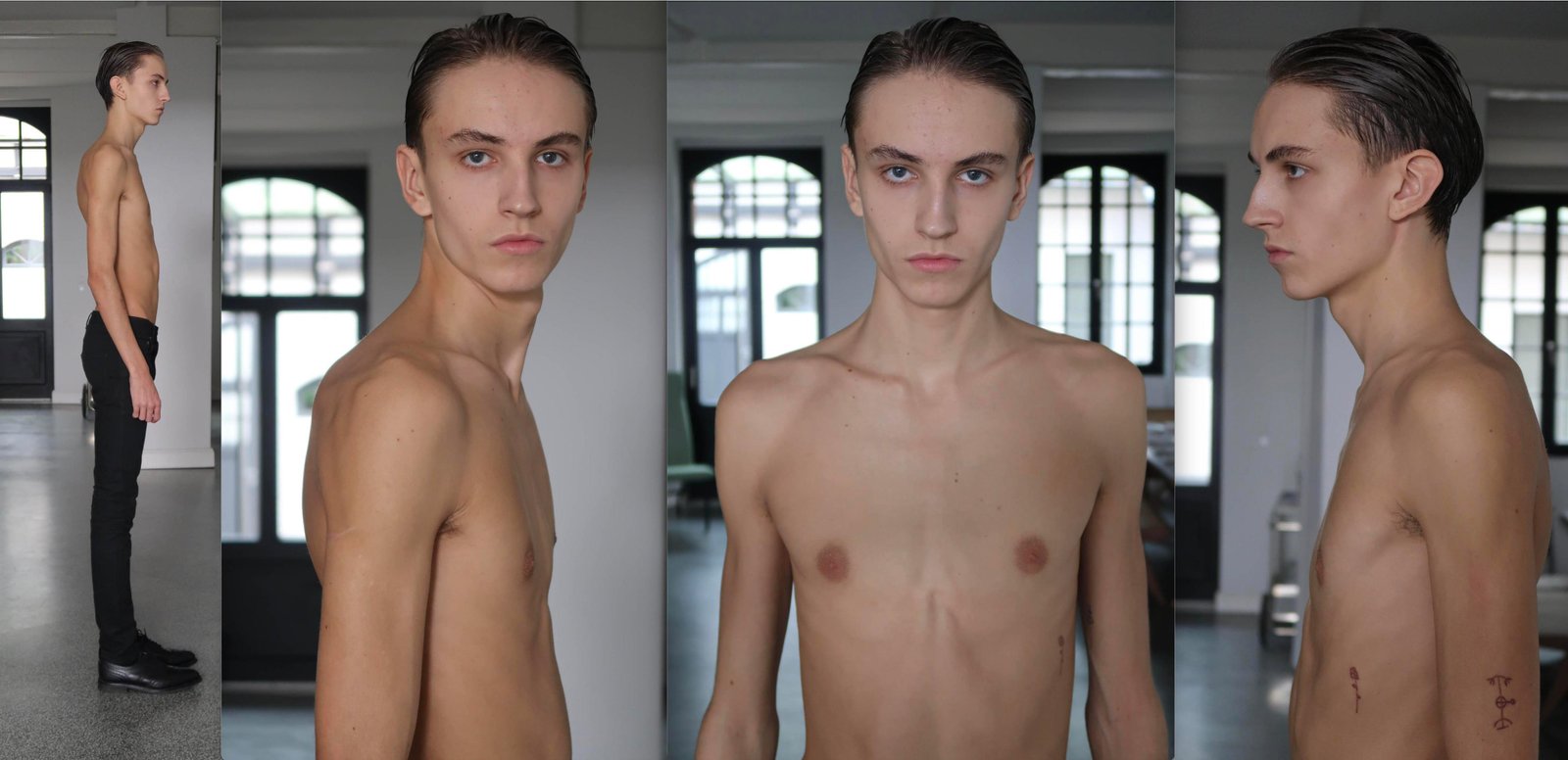
Walk into a Paris Fashion Week show today, and you’ll notice something striking: most models still
look remarkably similar. Long-limbed, androgynous, impossibly lean. It’s not an accident, and it’s
not new. This aesthetic has deep roots in European fashion history, powerful commercial logic
behind it, and consequences that ripple unevenly across different ethnicities and global markets.
But where did this all start? And why has it proven so stubbornly persistent?
The Architects of Thin: Who Actually Started This?
The story begins earlier than most people think. While the 1990s “heroin chic” era gets most of the
blame, the groundwork was laid decades before.
Twiggy and the Swinging Sixties: British model Twiggy (Lesley Hornby) arguably kicked off
fashion’s modern thin obsession in 1966. At 5’6″ and 91 pounds, with her pixie cut and doe eyes,
she became the face of mod London. Fashion designer Mary Quant and photographer Barry
Lategan helped propel her into the stratosphere. Twiggy wasn’t just thin—she represented a radical
break from the curvy, maternal femininity of the 1950s. She looked like a teenage boy, and that was
precisely the point.
The 1920s Blueprint: But even Twiggy had predecessors. The 1920s flapper movement—
championed by designers like Coco Chanel and Jean Patou—first popularized the slim, boyish
silhouette in mass fashion. Women literally bound their chests to achieve the straight, tubular look
that defined the era. Chanel herself was quoted saying she wanted to design for “the modern
woman” who was active, not corseted and confined.
The 1990s Waif Explosion: Then came the seismic shift. British photographer Corinne Day
discovered Kate Moss in 1988 when Moss was just 14. Day’s gritty, documentary-style shoots for
The Face magazine in the early 1990s created what we now call “waif” or “heroin chic”—models
who looked fragile, underfed, sometimes strung out.
Calvin Klein’s 1992 Obsession campaign with Kate Moss crystallized the look globally. At 5’7″ and
reportedly around 100 pounds, Moss became the anti-supermodel—the opposite of the Amazonian,
healthy-looking Cindy Crawford and Claudia Schiffer who’d dominated the 1980s. Klein reportedly
said he was “bored” with the supermodel era and wanted something “real.”
The problem? What felt “real” to an elite fashion photographer looked dangerously unhealthy to
much of the world.
Why Europe Fell So Hard for This Look
Two structural factors made Europe the epicenter of thin-worship:
Editorial prestige over commercial sense: Paris and Milan built their reputations on avant-garde
fashion—art you wear, not necessarily clothes you’d buy. Couture houses like Yves Saint Laurent,
Balenciaga, and later Hedi Slimane at Dior Homme wanted living sculptures, not walking
advertisements for shampoo. Very thin, androgynous bodies photograph dramatically under harsh
editorial lighting. They create striking silhouettes that look good in magazines but may never
translate to actual sales.
Oppositional aesthetics: Fashion thrives on shocking the previous generation. The waif look was
explicitly designed to rebel against the glossy, healthy supermodels of the 1980s. Being visibly
vulnerable, even unwell-looking, became a form of cool—a middle finger to commercialism and
conventional beauty. It was edgy. It was provocative. It sold magazines, even if it didn’t always sell
clothes.
When Paris and Milan shows set the agenda each season, global buyers and editors followed. What
played well in a European editorial became the benchmark everywhere else, whether it made sense
locally or not.
The Global Divide: What Looks Good in Paris Doesn’t Always Play in Mumbai
Here’s what gets overlooked: there’s no single “industry standard.” Body ideals vary dramatically by
market.
Europe (Paris/Milan/London): Still the capital of extreme lean. Runway statistics show that
straight-size models (US size 0-4) continue to dominate major European shows. Even with
occasional diversity pushes, progress has plateaued in recent years. The European market rewards
editorial prestige over commercial practicality.
United States (New York): A fascinating hybrid. New York Fashion Week sits between two worlds
—European editorial influence and American commercial reality. The US has a massive plus-size
retail market (worth billions) that Europe largely doesn’t. This created space for models like Ashley
Graham and Paloma Elsesser to build real careers. But high-fashion editorial work? Still dominated
by very thin bodies. The split is noticeable: commercial catalog work embraces size diversity;
Vogue editorials less so.
India: The situation here is layered and complicated. Traditional Bollywood beauty standards favor
fair skin and relatively slim builds, which already creates pressure. Indian high-fashion runways
have historically mimicked European aesthetics—partly because European luxury brands dominate
the high-end market there. But there’s growing pushback. Indian designers and activists are
increasingly challenging both Eurocentric thinness and colorism. The conversation about
representation—darker skin tones, diverse body shapes, regional differences—is heating up.
Japan: Japanese fashion markets operate on their own logic entirely. Street fashion subcultures
(Harajuku, kawaii, “genderless kei”) and local commercial formats mean different ideals. Japanese
agencies often prefer very slim builds, but for different reasons—”cute” aesthetics rather than haute-
couture drama. Height and proportion requirements also differ significantly from European standards.
The Ethnic Penalty: Who Gets Left Out
Here’s the uncomfortable truth: the European waif aesthetic doesn’t affect everyone equally.
Models of African, South Asian, or Southeast Asian heritage face compounded barriers. Eurocentric
beauty standards have historically privileged lighter skin, European facial features, and body
proportions that may not naturally occur in many non-European populations. When you add
extreme thinness to that mix, the gatekeeping intensifies.
Consider this: a Black British model trying to break into Paris high fashion faces pressure to be not
just thin, but thin in a very specific way—one that may not align with her natural body type. If she’s
curvier, even at a healthy weight, she gets pushed toward commercial work. Meanwhile, her white
counterpart with the same measurements might still book editorial.
The career bifurcation is real: Commercial modeling (catalogs, e-commerce, TV advertising)
increasingly rewards varied body types and ethnicities—it has to, because that’s who’s buying. But
editorial and high-fashion work, where Europe still holds cultural authority, remains stubbornly
narrow. This creates a two-tier system: commercial resilience versus editorial prestige. And prestige
still pays more, opens more doors, and builds the careers that last.
The psychological toll matters too. Models far from home, working in European markets without
strong support networks, are particularly vulnerable to eating disorders and mental health crises
under pressure to maintain dangerously low weights.
What Governments Tried to Do About It
By the 2000s, the backlash was building. High-profile deaths—like Brazilian model Ana Carolina
Reston in 2006 from anorexia-related complications—forced the industry to reckon with its
standards.
France went nuclear: In 2017, France passed laws requiring working models to produce medical
certificates proving they’re healthy enough to work. They also mandated that digitally retouched
images that alter body shape must carry labels saying “photographie retouchée.” Promoting
anorexia online became illegal. France essentially decided that if the industry wouldn’t regulate
itself, the government would do it by force.
Does it work? The medical certificate requirement at least creates a health baseline. But
enforcement is patchy, and the underlying taste economy—what buyers and editors want—hasn’t
fundamentally shifted.
The UK took a softer line: Britain leaned on industry self-regulation, advertising standards reviews, and public health campaigns. The Advertising Standards Authority has examined body-
image harms and produced guidelines. There’s been investment in media literacy programs for schools. But it’s guidance-based, not law. The industry can largely ignore it if it wants to.
The US relied on market forces: America has fewer regulations targeting model body sizes
directly. Progress came mostly from advocacy pressure, market demand, and brands voluntarily
adopting diversity policies. High-profile plus-size success stories and inclusive campaigns like
Savage X Fenty and Aerie’s unretouched ads nudged change. But elite editorial spaces—where the
cultural cachet lives—remain heavily skewed toward extreme thinness.
Has Anything Actually Changed?
Yes and no. Recent runway analyses show inclusion has improved in pockets—more plus-size
models at New York Fashion Week, more diversity in skin tones globally. But overall representation
remains overwhelmingly skewed toward straight-size bodies. Change is slow, uneven, and
sometimes regresses.
The core problem: editorial aesthetics, buyer preferences, and social media trends still drive demand
more than any regulation. You can mandate medical certificates, but you can’t legislate taste. And
taste, especially in fashion, is notoriously resistant to democratic reform.
What This Means If You’re In (or Want to Be In) Fashion
For models, especially from non-European backgrounds: Build cross-market versatility.
Commercial work provides sustainable income; selective editorial builds prestige. Know that what
Paris wants isn’t what Mumbai or Tokyo buys. Protect your health—no job is worth your life.
For agencies: Advocate for real health checks and transparent retouching. Stop betting everything
on the “look of the season” and prioritize long-term careers.
For brands and creative directors: Your photography shapes culture. Consumers increasingly
expect brands to reflect real bodies—recent data shows this isn’t just ethical posturing; it’s good
business. But you have to match the talk with consistent casting and buying decisions.
The Bottom Line
Fashion will always be about aspiration and provocation. The industry thrives on creating images
that make people dream, desire, and occasionally gasp. But when aspiration consistently excludes
entire communities—when it requires starvation to participate—it stops being creative and starts
being cruel.
Paris and Milan will continue creating compelling imagery. The question is whether those images
celebrate a narrow, medically risky ideal or evolve to include the multiplicity of bodies that actually
wear clothes.
The laws in France, the guidance in the UK, the market pressure in the US, and the growing
diversity conversations in India and Japan all suggest the industry is being pulled toward something
healthier. But it’s a tug-of-war, and the old guard is strong.
The waif aesthetic isn’t dead. But for the first time in decades, it’s actually being questioned—not
just by activists and doctors, but by consumers who’ve stopped believing that beauty only comes in
one very thin size.
That might not sound like much. But in fashion, even small shifts in taste can eventually reshape the
entire industry.
We’ll see if this one sticks.